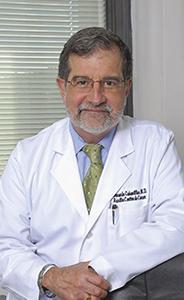
Before Hurricane Maria made landfall in Puerto Rico, Fernando Cabanillas, MD, of Auxilio Cancer Center (part of Auxilio Mutuo Hospital) in San Juan, was no stranger to the wrath of tropical cyclones. Puerto Rico had experienced many hurricanes, including the Category 5 Hurricane Irma just 2 weeks prior, which left 1 million Puerto Ricans without power despite only brushing the northernmost part of the island.
But every storm Dr. Cabanillas remembers pales in comparison to Hurricane Maria.
Category 5 Maria hit Puerto Rico on September 20, 2017, sustaining devastating 155 mile-per-hour winds, which left $94 billion worth of damage1 and knocked out electricity to 100% of the island in what has since been declared the world’s second largest blackout.2 The New England Journal of Medicine recently estimated a death toll of nearly 5,000 from the storm.3
When the formidable winds blew in the doors to Dr. Cabanillas’ condominium and lifted debris that smashed through the glass ceilings of its atrium, he recalls the harrowing suction-like feeling in the stairwell—where he remained for 12 hours. When Dr. Cabanillas was finally able to return to Auxilio Mutuo the following day, he discovered the storm had destroyed a glass panel on the ninth floor, causing flooding and equipment loss.
Apart from the ninth-floor destruction, though, Auxilio Mutuo fared better than many of the roughly 1,000 private medical offices in Puerto Rico that Hurricane Maria leveled. Auxilio Mutuo was equipped with a generator, but the hospital’s functionality was at the mercy of diesel distributors.
“There was enough diesel available on the island, but distribution was the issue,” Dr. Cabanillas said. “Had the distributors failed to arrive, the hospital would have been inoperable.” Unfortunately, this was the case at many smaller practices throughout Puerto Rico—a devastating phenomenon given the delays to power restoration. One month after the storm, 74% of the island’s electric customers lacked power, and by the start of 2018, this number had only declined to 55%.2 As of this writing, power has still not been restored to the entire island.
Devastation for Community-Based Oncologists
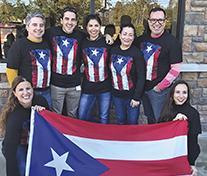
The oncology landscape in Puerto Rico primarily comprises small, community-based practices. Roughly 50 miles from San Juan in the remote municipality of Arecibo, Jose Davila, MD, a community-based oncologist/hematologist who treats patients from the island’s coastal and mountain regions, struggled to sustain care amidst Maria’s destruction. Like Dr. Cabanillas, Dr. Davila had experienced past tropical storms but was unprepared for the wrath of Maria.
“The duration of the storm was the most devastating,” Dr. Davila said. “With Hurricane Hugo in 1989, the worst part was over in a matter of hours, but with Maria, the rain and heavy winds just went on and on.”
At Dr. Davila’s practice, the immediate concern was keeping chemotherapy drugs refrigerated. The practice did have a diesel generator, but it ran out of fuel in several days, and refueling was nearly impossible.
“People were waiting in line at diesel stations for 12 hours, and sometimes the diesel trucks would not show,” Dr. Davila said. Many diesel stations organized priority lines for doctors, nurses, and first-responders, but these lines were only marginally shorter.
Dr. Davila had no choice but to shutter his practice when his generator ran empty but, determined to continue treating patients, he looked to a temporary solution. Roughly a week after the storm, Dr. Davila decided to move his practice into one of the larger hospitals on the island that had enough diesel and refrigerator space to share. Many community-based practices, however, didn’t have this option. “It depended on their proximity to a hospital,” he said.
Luckily—and unlike most of the island—the hospital Dr. Davila’s practice moved into had its power restored within several weeks.
Communication Barriers
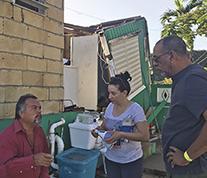
According to Dr. Davila, the lack of communication was even more problematic than the colossal power outages. “We temporarily solved the power loss by moving into a hospital, but communicating was impossible,” he said.
The storm rendered phone and internet services useless, so Dr. Davila’s patients needed to physically visit the hospital to speak with him—but to do so, they first needed to learn of the location change.
One AM radio station whose antenna survived the storm played a vital role in this regard. Small practices began submitting radio ads to the station to inform patients about temporary hospital relocations. Even with the radio, however, reaching patients was painstaking. In the first week following Dr. Davila’s move, only two of his regular patients visited. It was roughly a month before Dr. Davila saw upwards of 10 of his patients.
Communication was problematic for the larger hospitals on the island as well. At Auxilio Mutuo, Dr. Cabanillas and colleagues scrambled to reach patients and staff outside the immediate metropolitan area, making scheduling appointments impossible.
“We had no way of knowing how many patients would show up,” Dr. Cabanillas said. “Some dropped in without an appointment, and others never came. The situation was chaotic.”
Physician-to-physician communication was also vital in the storm’s aftermath. Practices—especially in remote areas—needed to determine which hospitals had sufficient diesel supply, refrigerator space, and medical resources to share. Oncologists from nearby regions created a taskforce to coordinate efforts. The taskforce met in person whenever possible and formed a group on the communication app WhatsApp to share messages. As small pockets of internet access began to reappear throughout the island, the WhatsApp group became increasingly useful. Physicians would send lists of medications or supplies they needed, and others would respond with contacts who could provide them.
Donations and Distribution
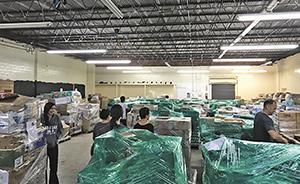
In the aftermath of Hurricane Maria, it wasn’t just diesel that was difficult to acquire; distribution barriers affected clothing, food, clean drinking water, and medical supplies.
“Certain medications were particularly difficult to obtain after the storm,” Dr. Cabanillas said. Although many of these medications—including chemotherapy drugs—were on the island, it frequently took 3 or more days to obtain them,
significantly delaying treatments.
Back in the United States, two of Dr. Cabanillas’ daughters who live in the Houston area immediately mobilized to help Puerto Rico, soliciting more than $2 million worth of medical supply donations.
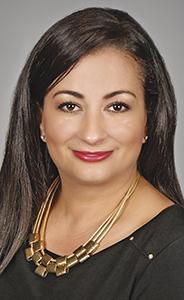
Marian A. Cabanillas, the UnitedHealthcare Plan President for South Texas, recalled how the task at hand seemed daunting. “I had zero experience with disaster relief,” Ms. Cabanillas said. “But the extent of the damage motivated me. People were dying because they couldn’t get treatment, and I had to do something.” Ms. Cabanillas joined forces with medical professionals in the region to form a nonprofit, Texas United for Puerto Rico.
The group quickly realized that to overcome the distribution barriers, they needed to deliver their donations directly to trusted individuals. Sending donations through the government or larger groups made it difficult to ensure equitable and timely distribution. Ms. Cabanillas’ familial relationships in Puerto Rico proved essential; her father identified providers on the island with the greatest need and communicated which resources they lacked.
Ms. Cabanillas explained that obtaining the donations from hospitals and organizations in Texas was easy. Just 1 month prior, Houston was hit with the Category 4 Hurricane Harvey, which brought catastrophic flooding and destruction itself. Although much of Houston was still recovering from the storm, the worst of the destruction had passed, leaving Houston with an untapped supply of donations. Within several days requesting supplies, Ms. Cabanillas’ living room was transformed into a warehouse. “There were boxes of medications stacked from floor to ceiling,” she said.
In addition to medical supplies, donations included cases of water, solar lamps, and satellite phones. In-demand medications included insulin, antibiotics, vaccines, and autoimmune drugs, and physical supplies included stethoscopes, catheters, and triage kits. “One practice had its entire supply of surgical equipment literally washed away by the storm,” Ms. Cabanillas said.
Although obtaining supplies was easy, physical delivery was challenging. Destruction to airport signals in Puerto Rico prevented commercial aircrafts from landing on the island. Ms. Cabanillas wasn’t deterred—she discovered that small, private aircrafts were still permitted. She drove down to Million Air, the Houston aircraft base where many private planes are kept, and informed personnel of Texas United for Puerto Rico’s mission. To her surprise, aircraft owners were eager to help the cause. The owners of 15 private planes volunteered to transport donations.
Ms. Cabanillas is still in awe at the empathy she saw in her efforts to help Puerto Rico—especially in the wake of Houston’s own debilitating storm. “One of my employees lost everything in Harvey and is now living in a trailer, yet she purchased a generator for Puerto Rico,” Ms. Cabanillas said. “The experience restored my faith in humanity.”
Texas United for Puerto Rico’s donations enabled many of Puerto Rico’s practices to continue treating patients—but the group also went a step further and began transporting patients with severe cases back to the U.S. mainland for treatment. After each donation drop, private aircrafts brought select patients back on the return trip. Having trusted connections in Puerto Rico was essential; Ms. Cabanillas relied on her father to communicate with physicians to determine which patients should be relocated to U.S. hospitals.
Current Needs, Future Preparation
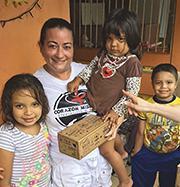
Now, months after Hurricane Maria’s destruction, Texas United for Puerto Rico is no longer delivering medical supplies—but it’s still working to help Puerto Rico recover. For the next phase of its efforts, the group plans to donate microgrants to municipalities to rebuild infrastructure. These grants will go toward projects like building wells in communities that have permanently lost their connection to water lines.
As of May, Puerto Rico is still far from full recovery. Although much of the island’s electricity has been restored, most towns experience regular outages. Dr. Davila said many community-based oncology practices on the island—including his own—have yet to return to their pre-Maria functionality.
Entering hurricane season once again, oncologists in Puerto Rico insist preparation is crucial. Dr. Davila hopes
community-based practices and hospitals on the island will establish a system for relocation and partnership. “We moved into a hospital spur-of-the moment because we needed to,” Dr. Davila explained. “But this was never a plan before Maria. Going forward, it should be organized.”
Dr. Cabanillas echoed the need for preparation. “All hospitals and practices should be equipped with an electric generator and ample fuel,” he said. “Their offices should be protected by storm shutters, and they should fill their cars with gasoline at any threat of a storm.”
As the upcoming hurricane season approaches, Puerto Rico needs help more than ever. ASCO’s Conquer Cancer foundation has partnered with CancerCare to establish a Hurricane Relief fund dedicated to helping patients in need of critical support services. For more information, visit asco.org/resources-disaster-assistance or attend the June 4 Education Session at the ASCO Annual Meeting, “Cancer Care for Displaced Populations: Conflict and Natural Disasters.”
–Caroline Hopkins