When Hurricane Harvey hit Houston on August 25, 2017, bringing with it up to 56 inches of rainfall, the medical staff at The University of Texas MD Anderson Cancer Center had to work quickly and tirelessly to adapt. The severe flooding in the wake of the storm challenged the institution in unexpected ways, reinforcing the need for detailed planning and consistent communication. Oncology professionals learned a great deal about hurricane preparation through the experience—and saw a level of dedication in their staff that cannot be overstated.
Ride Out Team Challenges
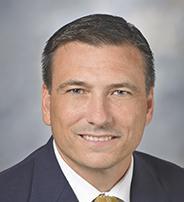
John V. Heymach, MD, PhD, chair of MD Anderson’s Department of Thoracic/Head and Neck Medical Oncology and chair of ASCO’s Cancer Communications Committee, explained why MD Anderson needed additional help in the wake of the storm despite the designated Hurricane Ride Out Team the hospital had preemptively organized.
“In accordance with our plans for natural disasters at MD Anderson, the Ride Out Team was supposed to spend the night in the hospital to handle all the inpatient responsibilities if necessary,” Dr. Heymach said.
But MD Anderson faced an unexpected circumstance that developed during Hurricane Harvey. When it began raining heavily on August 26, the precipitation did not initially cause major flooding. MD Anderson’s leadership determined the streets looked passable and dismissed the Ride Out Team for the evening.
Unfortunately that night, however, the rain picked up to a torrential downpour. “The bayous became flooded, the ground became saturated, and there was a rapid rise in flooding,” Dr. Heymach explained.
Due to the unexpected flooding, much of the Ride Out Team—including those who lived just several miles away from MD Anderson—were unable to return to the hospital the morning of August 27 as planned.
“That morning, I got a call from a faculty member on the Ride Out Team,” Dr. Heymach said. “I asked her how far she thought she could drive her car on her way in, and she told me that her car was floating down Holcombe Boulevard, the main street she would’ve taken to get to the hospital.”
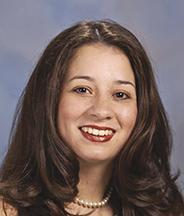
Maria E. Cabanillas, MD, an oncologic endocrinologist at MD Anderson, called the experience sobering. “The streets looked like rivers,” Dr. Cabanillas said. “Nobody anticipated how quickly they would flood.”
Adapting to Unexpected Needs
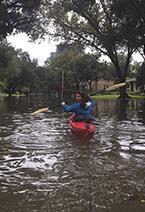
As a result of the severe flooding on the morning of August 27, MD Anderson suddenly found itself dangerously understaffed. This required those at the hospital to improvise, putting a new plan into place as quickly as possible. Nearby faculty and staff members like Dr. Cabanillas were vital to MD Anderson’s ability to adapt. Although she was not part of the Ride Out Team that MD Anderson had designated to remain on call during the storm, she lived closer to the hospital than many of its members and was therefore able to transport herself to the hospital when it became clear additional help was needed.
When disaster respondents then made a small handful of high-water vehicles available to MD Anderson to bring in otherwise stranded personnel, the hospital needed to swiftly prioritize which members of the Ride Out Team were most vital. There were not enough vehicles to transport them all.
Prioritizing these vehicles proved challenging because it was difficult to predict which staff members were the most needed. “In the beginning, there was a big emphasis on getting physicians and nurses in, but we quickly realized how many other jobs were required to keep the institution running,” Dr. Heymach said.
For instance, MD Anderson lacked investigational pharmacists immediately following the storm, which meant all the patients on clinical studies were unable to get the drugs they needed. “We were short on EKG technicians, the staff members that ran the surgical sterilization system, and those who ran the laundry and food preparation,” Dr. Heymach said.
MD Anderson had to reassess their priorities, ordering the high-water vehicles not to focus on the hospital’s physicians and nurses, but rather the many other vital staff members unable to make it through the flooded streets.
“I think the reason MD Anderson was able to make it through Harvey successfully was how adaptive and flexible our staff and leadership acted,” Dr. Heymach said. “The group was incredibly resourceful.”
Communication Challenges
Dr. Heymach said communication—with patients and staff alike—was ultimately the most vital aspect of continuing care after the disaster. Crista Madsen Latham, the vice president of strategic communications at MD Anderson, echoed this reflection. “With local power and internet outages as well as travel concerns for out-of-town patients, we knew we needed to use as many communication tools as possible to share accurate and timely information,” Ms. Latham said.
Although MD Anderson did not experience complete cell service failure in Houston, Dr. Heymach said communication issues during Hurricane Harvey arose in other detrimental ways. Amid widespread panic, for instance, false information began circulating on social media that MD Anderson was completely submerged in water.
“Inaccurate messages about destructive flooding caught on like wildfire on Twitter, and MD Anderson began to receive a high volume of calls about it,” Dr. Heymach said.
Anxiety caused by the misinformation prevented many patients in need of care from coming into the hospital, and MD Anderson quickly learned the importance of communicating frequently and directly through a variety of media channels. Staff members had to tweet, post, and consistently announce that the hospital was not, in fact, submerged in water, and that it was still accepting patients on an emergency basis.
“Team members monitoring social media had to respond directly to misinformation about flooding in our buildings and then also reach out to media outlets to correct information,” Ms. Latham said. “As soon as possible, we shared photos to show our buildings were dry and that patients and staff were safe.”
The team members tasked with responding to inquiries over the phone and on social media played a vital role in MD Anderson’s communication tactics in the wake of the storm. “A team of only 30 employees answered nearly 8,500 calls from patients and family members during the storm,” Ms. Latham said. “Our social media team worked round-the-clock shifts. On Facebook, our posts during the storm reached 2.2 million people and were shared nearly 18,000 times, and on Twitter, we saw 1.5 million impressions and 3,000 retweets.”
Electronic Medical Records Prove Key
The accessibility of electronic medical records (EMRs) also played a significant role in MD Anderson’s ability to treat patients after Hurricane Harvey. Early in his career, Dr. Heymach treated many patients from New Orleans who were transported to Houston after 2005’s Hurricane Katrina. He recalled how difficult it was to treat patients who “knew they had cancer but could not give any additional details about the primary site, what chemotherapy they were getting, or their medical history.”
Because the patients arriving from New Orleans over a decade ago did not have access to medical records—and their physical records were destroyed by the storm—oncologists at MD Anderson had to start from scratch diagnosing and treating them. But luckily when Harvey hit Houston, Dr. Heymach said it was the use of EMRs that safeguarded MD Anderson from repeating this scramble. The EMRs also made it possible for physicians who were unable to get to the hospital to continue monitoring patients remotely.
Lessons Learned From Harvey
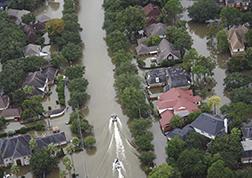
Certain preparatory measures prior to a storm might seem obvious—securing back up sources of power and reinforcing ground floors of buildings, for instance. But MD Anderson’s experience in the wake of Hurricane Harvey illustrated how providers must take less obvious measures as well, particularly in regard to staffing and communication needs.
“Communication is absolutely critical as an organization moves into the recovery phase following a weather-related event,” Ms. Latham said, adding that hosting feedback sessions with various audiences several weeks after the storm helped the MD Anderson’s communications team pinpoint areas of improvement. “There’s always something to learn from after an emergency,” she said. “Hearing about the issues and concerns [patients and staff] faced during the storm was a powerful tool—as well as a reminder of the importance of our work.”
Dr. Heymach echoed this need for strategic communication, adding the suggestion that institutions should ensure human resources in less obvious areas. “Going forward, MD Anderson has decided to broaden the Ride Out Team Plans, making sure to take into account other staff members like EKG technicians and ensure that there is always dedicated night coverage, regardless of the apparent severity of the storm’s conditions.”
For more information on preparing for natural disasters in oncology, visit asco.org/resources-disaster-assistance or attend the Education Session “Cancer Care for Displaced Populations: Conflict and Natural Disasters” on June 4.
–Caroline Hopkins