
As one of the world’s largest archipelago nations—comprising more than 7,100 individual islands—the Philippines is disparate by nature. Among its population of 100.9 million people, demographics, economic standing, and living conditions vary considerably. Although the country’s rich natural resources and environmental assets secured a 6.6% economic growth rate in 2012, 26.5% of the population still lives below the poverty line, and with a gross national income per capita of $3,580 in 2016, the Philippines is classified as a low- to middle-income nation.1,2
Nowhere is this disparity so clearly reflected as in the Philippines’ health care system—and, accordingly, its cancer care.
“In the private hospitals—which are mostly concentrated in major cities—the level of cancer care is on par with comprehensive cancer hospitals in the United States and other high-resource settings,” Marie Belle Francia, MD, MSc, a medical oncologist at St. Luke’s Medical Center, in Manila, and a 2014 recipient of ASCO’s International Development and Education Award in Palliative Care (IDEA-PC), said. “But then in government hospitals, cancer care is less developed due to a lack of government funding.”
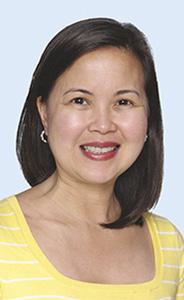
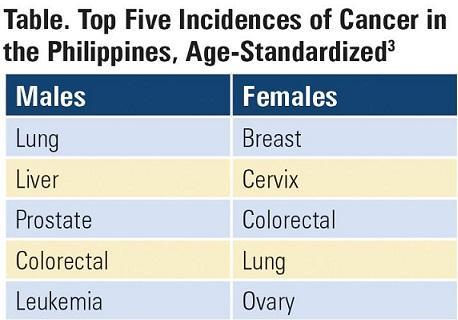
The comprehensive care offered at private hospitals comes at a much higher expense than the care offered at government hospitals. Coupled with the fact that there are 98,200 new cases of cancer diagnosed in the Philippines each year, this expense results in a significant financial burden nationwide.3
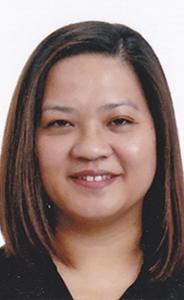
“Here in the Philippines, families and loved ones often pay for treatment themselves,” said Maria Diana Aileen Bautista, MD, a medical oncologist at the University of Santo Tomas Hospital, in Manila, and a 2017 International Development and Education Award (IDEA) recipient.
In 2011, out-of-pocket expenditures in the Philippines accounted for 52.7% of total household health expenditures, which is over the World Health Organization’s threshold for catastrophic expenditure leading to impoverishment.4 The financial disparity is exacerbated by the fact that not all medications are marketed and available in the country, which drives up the prices of those that are available. This often leads patients with cancer little choice but to discontinue or abandon treatment.
Barriers to Palliative Care
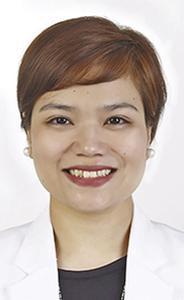
Pauline Cauton, MD, also a medical oncologist at St. Luke’s Medical Center and a 2018 IDEA-PC recipient who works alongside Dr. Francia, said the public-private dichotomy dictates priorities for Filipino oncologists and their patients.
“In general, just getting the chance to receive treatment is the presumed goal. When all energy and focus is poured into getting the patient from one cycle of chemotherapy to the next, it can get quite difficult to start talking about, say, options for palliative care,” Dr. Cauton said.
Palliative care is a complicated topic for oncologists in the Philippines. For Dr. Francia and Dr. Cauton, both of whom have taken a special interest in helping patients with cancer manage pain and distressing symptoms, palliative care’s lack of integration into the broader Filipino oncology landscape has posed a distinct challenge.
“Here, the primary physician or medical oncologist handles palliative care,” Dr. Bautista explained. “But there is a lack of confidence in handling pain medications, and there is a lack of community understanding about what palliative care can offer.”
Dr. Cauton added that to most Filipinos, the term “palliative care” simply means “we’ve run out of options.”
“There are few Filipinos who understand what [palliative care] is and what it can do for patients and physicians,” she said.
Internationally, published studies show that integrating palliative care early on in the course of a patient’s treatment can result in myriad positive results; doing so has proven beneficial to patients’ overall survival and quality of life in certain cancers.5 But these studies have yet to proliferate the Filipino oncology landscape.
The lack of understanding when it comes to palliative care is coupled with challenges to access. Although there are several large hospitals in the Philippines with established palliative care services, Dr. Francia said the majority don’t offer palliative care to patients with cancer during the course of their treatment.
“We need places to refer patients who would benefit from palliative care,” Dr. Cauton said. “We hope that exposure to palliative care education will inspire and embolden more Filipino oncologists to ride against the waves of convention and establish these services—even if they start with their own private practices.”
That’s exactly what Dr. Francia and Dr. Cauton are pushing for in their own institution, and with the help of mentorship and exposure facilitated through ASCO’s IDEA-PC program, they’re on their way to making this a reality.
Mentorship From Abroad
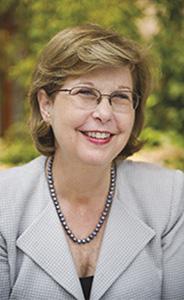
Janet Lee Abrahm, MD, former chief of the Division of Adult Palliative Care at the Dana-Farber Cancer Institute/Brigham and Women’s Hospital and professor of medicine at Harvard Medical School, was matched through the IDEA-PC program as a mentor to both Dr. Francia and Dr. Cauton.
Today, Dr. Abrahm has an official palliative care specialization—but that wasn’t always the case. In the early days of her career, before hospice and palliative medicine became a formal subspecialty in 2006, Dr. Abrahm struggled with many of the same issues facing Filipino oncologists today. Having experienced the transition firsthand, Dr. Abrahm is an effective mentor for Dr. Francia and Dr. Cauton.
Dr. Abrahm cited several difficulties she faced while providing palliative care without a specialization, all of which are concerns in the Philippines today. Prior to 2006, palliative care was no different than general oncology in the eyes of insurance companies. “The billing was awkward,” she said. “It looked like two oncologists were seeing the same patient, even though I was providing palliative care—a completely different service. We had to meet with insurance companies and prove that all of our consultations were different.”
Even once palliative care became a subspecialty in the United States, Dr. Abrahm continued to struggle with the same stigmas and lack of understanding that Dr. Francia, Dr. Cauton, and Dr. Bautista described. “We needed to show that we could help patients finish curative chemoradiotherapy for cancer of the head and neck by controlling their pain and secretions, not just help at the end-of-life stage,” Dr. Abrahm said.
Over the next decade, exposure, integration, and frequent conversations began to move the culture in the United States toward accepting and integrating palliative care. “I’m hoping I can help with that in the Philippines,” Dr. Abrahm said. “But first, they need to establish a culture in which multidisciplinary care is the norm.”
Moving Toward Multidisciplinary Care
Dr. Abrahm’s first foray into mentorship in the Philippines came in 2014, when she accompanied several colleagues who were traveling there to lead an ASCO Multidisciplinary Care Management Course (MCMC), a program intended to improve cancer care globally by promoting interdisciplinary cancer management through mock tumor boards and education on different aspects of treatment. But Dr. Abrahm’s palliative care expertise wasn’t actually integrated into the mock tumor boards and panels on that first trip; she was instead making rounds in the local hospitals as Dr. Francia’s mentor and serving in the faculty of ASCO’s Palliative Care Train-the-Trainer program, led by Frank Douglas Ferris, MD, of OhioHealth.
The program offered MCMC attendees and select nurses from throughout the Philippines the option to attend workshops focusing on strategies for implementing palliative care as well as teaching symptom management and patient communication. “We were separate from the MCMC, so the physicians had to choose which one to go to,” Dr. Abrahm said.
Despite the separation, Dr. Abrahm’s trip to the Philippines in 2014 opened many Filipino oncologists’ eyes to palliative care integration. Dr. Abrahm recalled the impact of a suggestion she made for one of the patients in the charity hospital during the rounds that trip. “The patient had cancer all throughout their lungs, and I suggested using an opioid for shortness of breath, which no one had thought of doing before,” she said. “The next day, the oncologists treating that patient told me they had tried my suggestion and that it had really worked—the patient felt much more comfortable. They were so excited and encouraged.”
It was during this first visit that Dr. Abrahm drew a strong connection between palliative care in the Philippines and her early years of practicing in the Unites States, thereafter shaping her role as a mentor.
Visible Progress
When she returned to the Philippines to join another MCMC in October 2017, Dr. Abrahm was fully integrated into the mock tumor boards as a palliative care consultant—a palpable change she found extremely promising.
“In just 3 years, you could really tell the difference,” Dr. Abrahm said of integrating palliative care into multidisciplinary education. “I had the same number of slides as the medical, surgical, and radiation oncologists, and the attendees were very receptive to my input.”
When Dr. Abrahm met with Dr. Francia during this recent trip, she was thrilled to see that Dr. Francia and her colleagues—including Dr. Cauton—had taken the initiative to establish a full palliative care program at St. Luke’s Medical Center. In just 3 years, Dr. Francia and her colleagues had been able to make a case for a palliative care program and get approval from the hospital’s board to begin implementation.
Areas for Improvement
The progress Dr. Abrahm noticed when she returned to the Philippines in 2017 is reflective of an overall effort to establish multidisciplinary cancer care in the Philippines, but the country still has a long way to go.
“Multidisciplinary care for patients with cancer is still not standard in the Philippines,” Dr. Francia said, pointing out that the promising integration under way at her hospital in Manila does not necessarily go hand-in-hand with improvement across the disparate country. “It is not mandatory in all hospitals.”
“We try to coordinate with a multitude of specialties, including surgery, rehabilitation medicine, and psychiatry,” Dr. Bautista said. “But there are still so many things needed.”
The Power of Exposure
As part of the IDEA-PC program, Dr. Francia and Dr. Bautista both traveled to the Unites States—as will Dr. Cauton this June—to attend the ASCO Annual Meeting and spend a week shadowing their mentors at their institutions.
“Exposure to integrated cancer management allowed me to appreciate the level of care offered at a comprehensive cancer center and bring that back to my hospital,” Dr. Francia said of the experience.
“Seeing the juxtaposition of how things are [in other countries] will move Filipino oncologists to resolve to make things better,” Dr. Cauton added. “We cannot just accept things the way they are without trying to do things differently. We just need to start doing it, even in the littlest of steps.”
Dr. Francia, Dr. Cauton, and Dr. Bautista all agreed that perhaps the most valuable benefit of the educational programs ASCO has brought—and continues to bring—to the Philippines is simply exposure to how multidisciplinary care teams can collaborate to treat patients from a full spectrum of approaches. Although oncologists can read about multidisciplinary care and consume didactic materials available through online learning and textbooks, it is difficult to truly grasp its benefits and understand how it works without experiencing it in person.
In multidisciplinary cancer care, “coordination is a key to progress,” Dr. Bautista said. “As a country, we are getting there, step by step, with the help of our local and international colleagues, our patients, and the whole community.”
In collaboration with the Benavides Cancer Institute University of Santo Tomas Hospital, ASCO will be hosting another MCMC in Manila, November 14-16, 2018. For more information, visit asco.org/international-programs.
–Caroline Hopkins